- Teacher: Nurul 'Izzati binti Hashim
- Teacher: Shirley anak Rufus
- Teacher: Yanuar Zulardiansyah Arief


This course provides the final year students with an opportunity to learn management in nursing. It prepares students to be a professional nurse.

Family Health 1 block is a community-oriented course that expands throughout Year 1. This course enables the students to acquire knowledge and skills in identifying various aspects and assessment of family structure, family dynamics and family health through the guided interaction with foster families. The student's communication skills would be enhanced through the interaction in the family and community activities. The teaching-learning activities complement the blocks in Year 1. The assessment methods include continuous assessment (report, community-based project and logbook) and final assessment (oral presentation).


This course covers the understanding of modern medical imaging technology, its usage to localize diseases and generate differential diagnoses. Throughout this course, students will be exposed to various imaging modalities, risks and benefits of ionizing X-ray imaging, radiological anatomy and various radiological signs of diseases.
This course exposes Year 4 Medical Students to services and diseases commonly encountered in Primary Care and also District Hospital.
This course is a major posting in Year 4 for undergraduate students. Students will learn about introduction to orthopaedic and basic orthopaedic emergencies which is commonly encountered in medical field.
This course is to provide students with an overview of the principles and concepts of epidemiology. In so doing, it attempts to illustrate the relationship of epidemiology in public health. The emphasis is on the epidemiologic approach to disease and intervention, using epidemiology to identify the cause of disease and applying epidemiology in disease prevention and control measures.

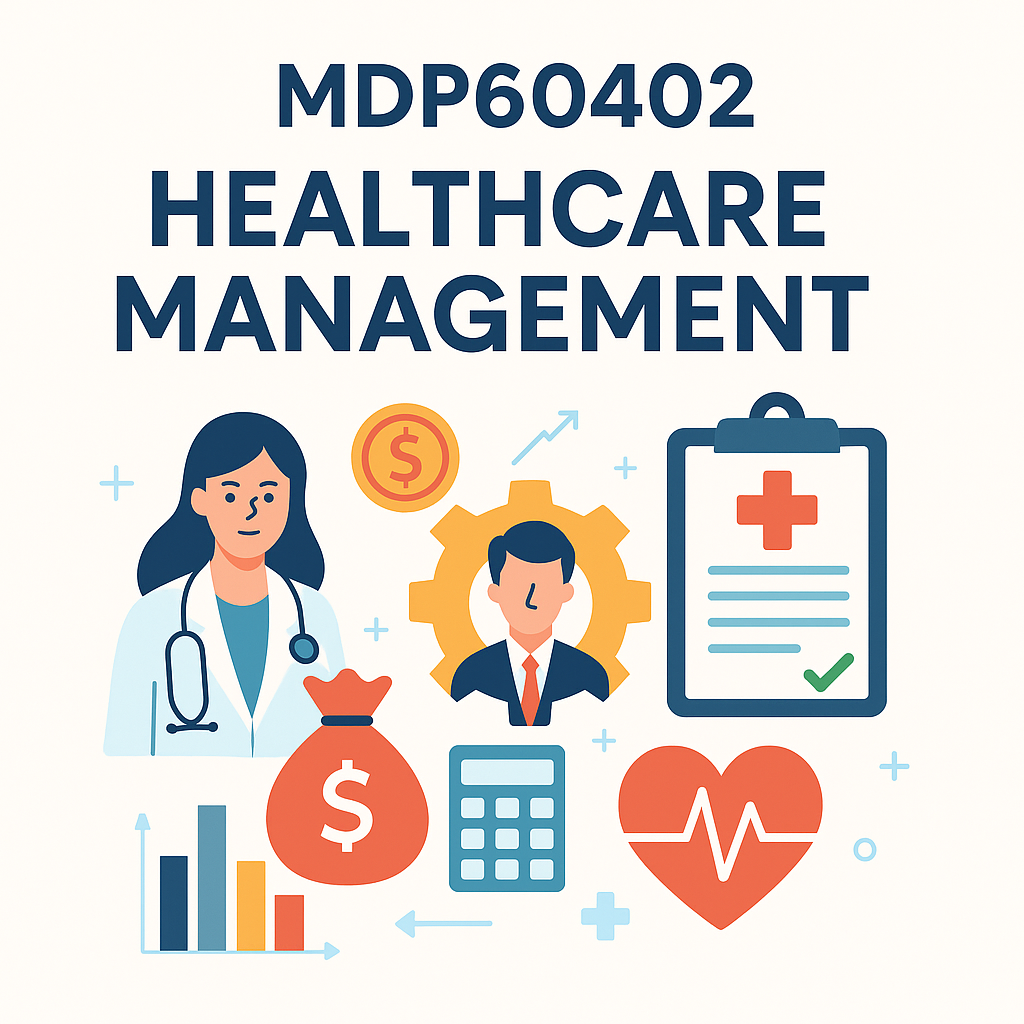
The MDP60402 Healthcare Management course is one of the courses taught in the MPH programme.
This course emphasises on the application of management theories and principles in health care management. The course shall cover the following areas: basic principles of management, health care management, basic financial management and human resource management.

This course comprises various aspects of the family, its development, and components in the family institution, including lifestyle, cultural factors, and family health. In addition, the family health programme conducted by the Ministry of Health Malaysia will also be included, together with programmes conducted by other agencies or institutions like religious bodies, LPPKN, etc. This course hopes to provide an in-depth view of various aspects of the family particularly its relation to health.
This course focuses on concepts and theories of demography and population dynamics. It also encompasses the factors that influence population growth. The course includes topics related to population issues and problems, as well as government policies and related programs

This course is offered in Semester 2 of the Master in Public Health (MPH) programme and examines mental health from a population health and systems perspective. It focuses on the epidemiology, determinants, prevention, and governance of mental disorders in community settings. The course explores prevalent mental health conditions and psychosocial challenges across the life course, situating them within broader social, cultural, economic, and environmental contexts. Students will analyse the burden and distribution of mental health problems in diverse populations, with particular attention to vulnerable groups, health inequities, stigma, and the influence of social determinants on mental well-being.
Emphasis is placed on applied public health competencies in community mental health assessment, programme planning, service integration, and policy analysis. Students will develop skills in screening and case detection strategies at the primary care level, service gap analysis, and the design and evaluation of evidence-informed mental health interventions. The course also addresses ethical considerations, intersectoral collaboration, leadership, and health systems strengthening, preparing MPH trainees to translate epidemiological evidence into feasible district- and state-level strategies for improving mental health outcomes in complex, real-world settings.


This course will discuss the laws and regulations of concern to the Ministry of Health Malaysia and their relevance to the medical and health practices locally. Some of these laws will be discussed in depth. Students will examine these laws concerning the rationale of their evolvement, authority, enforcement, offences, and others. Students are also to take the opportunity to follow the enforcement team during their activities and observe court cases when available.
This course also explains health policies, how they are formulated, and the objectives and functions of policies concerning health. This course will also expose students to laws and regulations pertinent to medicine and public health practices in Malaysia and their relevance at the international level.
This course is part of the continuous assessment of research project 1 (Semester 1) which prepares the students to em-bark on a research project for the requirement of the programme.
The emphasis of this course is on the application of management concepts, theories and principles in certain areas of health care management.
The course shall cover the following areas:
• Governance, stewardship and direction, Leadership organisation and management, Roles and functions at different levels in relation to health planning, organization, direction, staffing, control and motivation in health services and programme;
• Principles of health human resource management aspects of individual, interpersonal and organisational as well as personnel/employee, resource and talent capital - management and development;
• Managing change/transformation and transition; Decision-making delegation and empowerment – mission values and Vision, motivation and commitments, relationships and communications, bargaining and negotiating as well as ethics and morality in management in general and, in particular, healthcare settings.
This course focusses on developing solid statistical knowledge and skills for public health applications through lectures, readings, and computer labs, allowing hands-on analysis of real datasets. The course aims to build on the foundations of MDP 60203: Biostatistics in the Master of Public Health Programme and provides more advanced statistical techniques in analysing real datasets. This involves identifying the most appropriate statistical methods, applying those techniques using the SPSS statistical computing package, and interpreting the results
This course focuses on developing sound statistical knowledge and skills for public health applications through lectures, readings, and computer labs, allowing “hands-on” analysis of real datasets. This involves identifying the most appropriate statistical techniques and modelling, applying them using statistical computing packages such as SPSS, JAMOVI, SmartPLS, etc., and interpreting the outputs. Students will be exposed to higher-level statistical analysis, including factor analysis, structural equation modelling, generalised equation modelling, cluster analysis, and survival analysis.
The first course, MDP 72803 Public Health Research 1, serves as the foundation of the research training sequence, focusing on the development of a comprehensive and feasible research proposal. Candidates are guided through the essential steps of formulating a research problem, reviewing relevant literature, developing appropriate objectives and hypotheses, and selecting suitable study designs and methodologies consistent with ethical standards. The course also prepares them to refine their proposals into workable plans that can be effectively executed and defended before a panel, thereby building confidence in articulating and justifying their research choices. Additionally, it fosters the development of vital, transferable skills. Ethics and professionalism are reinforced through discussions of responsible conduct and research integrity. Cognitive skills are strengthened through critical thinking and methodological reasoning. Communication skills are enhanced through both written proposal preparation and oral defence. By the end of this course, candidates will possess a solid research plan that sets the stage for subsequent phases of their dissertation work while cultivating essential attributes required of capable and ethical public health researchers.