This course is the graduation requirement for non-IT background students from the MITM program.
- Teacher: Mohamad Nazri bin Khairuddin Yap
- Teacher: Stephanie Chua Hui Li
This course is the graduation requirement for non-IT background students from the MITM program.

This course integrates marketing research into strategic decision-making process in global business. The key areas are build on marketing thoughts and theories, methods and strategy alternatives for the businesses to adopt, and the implementation of strategic marketing management that contribute to strategic success of global businesses. The focus of this course will be on issues and research in commercializing new global products, venturing into international markets, sustainable business decisions, and ethical considerations in global marketing strategies.
This course introduces Corporate Management students to the research methods relevant to the business field. It prepares the students with the fundamental knowledge and business research skills that enable them to undertake a research project appropriate to their degree level. Through this course, the students will learn: to identify and determine appropriate problems and questions that necessitates a research approach to be conducted; to perform literature review and intelligence gathering; to develop a preliminary theoretical / conceptual framework and research design; to assess and select appropriate research methods and techniques to gather and analyze data; and to produce meaningful and useful presentation of research findings. The students are expected to produce a research proposal that is appropriate with the scope and the expected duration of the research project, where they will pursue the proposed research as part of fulfilling their degree requirement.


This course is taught to equip students with essential research skills needed to design, conduct, analyse, and report systematic and ethical research. It builds the foundation for evidence-based decision-making, supports the successful completion of research projects and theses, and prepares students to contribute credible scholarly and professional knowledge in their field.
This course introduces students to the actual work environment in an
organization of their choice. Students have the opportunity to perform
work under supervision in an organization, record their daily work in a log
book, explain about the work they do during the industrial training to the
University Supervisor and write a report about concepts, theories or
practices they had learned in their study and applied to the actual work
environment. Students are also given a project to do at the organization.


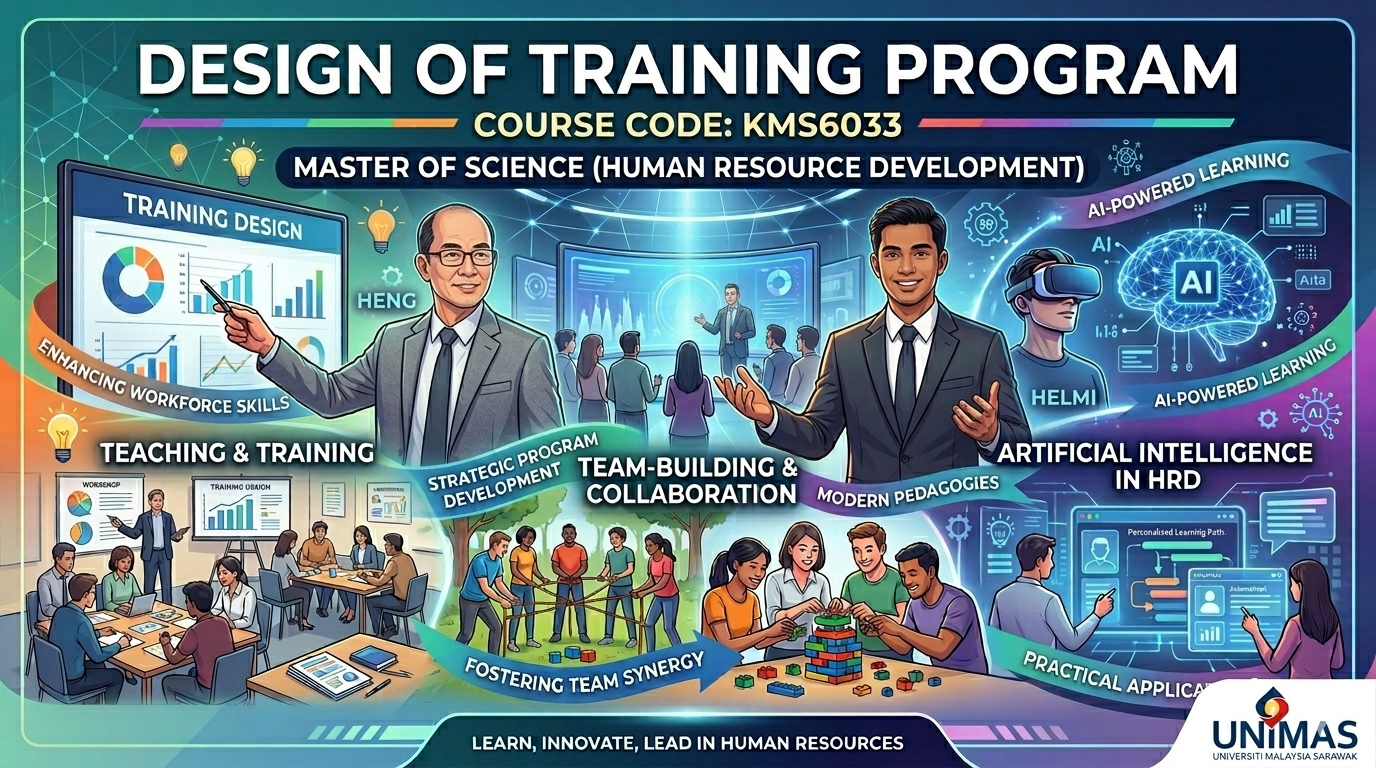
Training and developing human resources will determine the success of an organization. Training programs must be carefully designed and managed to meet the needs of the organization and the people in it. This course introduces the concept of training and development, and the principles and guidelines for the design and management of effective training programs. Topics to be discussed include an overview of training and development, ways of identifying training needs, formulation of training objectives, effective teaching and learning strategies, development of the curriculum, methods of training, management of training location and resources, training administration, and evaluation of training programs. It also looks at some organizational factors affecting training and development.
An optical telecommunication network has become a dominant and reliable data transmission technology. Fast advancements in optical network urge the needs of further researches to be done on the optical communication design and architecture. In this course, the principles and technologies of optical communication systems will be introduced. Design considerations that need to be taken into account when designing such optical communication system will be included.
This course probes further into an advanced processing of digital signals. It covers fundamental theory and progresses into the design of digital filters. The functions of windows for filtering, the construction of FIR and IIR Filters and multirate signal processing will also be included.


This course provides the final year students with an opportunity to learn management in nursing. It prepares students to be a professional nurse.

Family Health 1 block is a community-oriented course that expands throughout Year 1. This course enables the students to acquire knowledge and skills in identifying various aspects and assessment of family structure, family dynamics and family health through the guided interaction with foster families. The student's communication skills would be enhanced through the interaction in the family and community activities. The teaching-learning activities complement the blocks in Year 1. The assessment methods include continuous assessment (report, community-based project and logbook) and final assessment (oral presentation).


This course covers the understanding of modern medical imaging technology, its usage to localize diseases and generate differential diagnoses. Throughout this course, students will be exposed to various imaging modalities, risks and benefits of ionizing X-ray imaging, radiological anatomy and various radiological signs of diseases.
This course exposes Year 4 Medical Students to services and diseases commonly encountered in Primary Care and also District Hospital.
This course is a major posting in Year 4 for undergraduate students. Students will learn about introduction to orthopaedic and basic orthopaedic emergencies which is commonly encountered in medical field.
This course is to provide students with an overview of the principles and concepts of epidemiology. In so doing, it attempts to illustrate the relationship of epidemiology in public health. The emphasis is on the epidemiologic approach to disease and intervention, using epidemiology to identify the cause of disease and applying epidemiology in disease prevention and control measures.

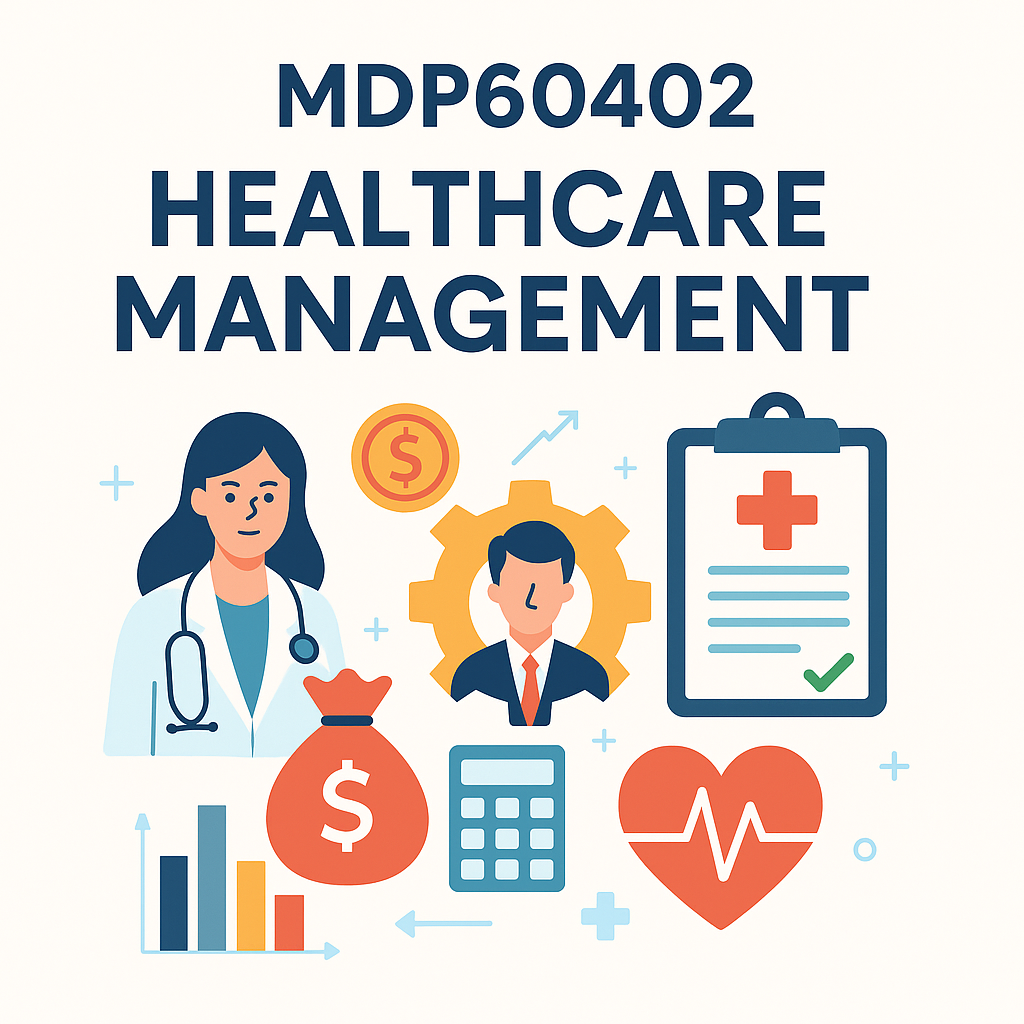
The MDP60402 Healthcare Management course is one of the courses taught in the MPH programme.
This course emphasises on the application of management theories and principles in health care management. The course shall cover the following areas: basic principles of management, health care management, basic financial management and human resource management.

This course comprises various aspects of the family, its development, and components in the family institution, including lifestyle, cultural factors, and family health. In addition, the family health programme conducted by the Ministry of Health Malaysia will also be included, together with programmes conducted by other agencies or institutions like religious bodies, LPPKN, etc. This course hopes to provide an in-depth view of various aspects of the family particularly its relation to health.
This course focuses on concepts and theories of demography and population dynamics. It also encompasses the factors that influence population growth. The course includes topics related to population issues and problems, as well as government policies and related programs

This course is offered in Semester 2 of the Master in Public Health (MPH) programme and examines mental health from a population health and systems perspective. It focuses on the epidemiology, determinants, prevention, and governance of mental disorders in community settings. The course explores prevalent mental health conditions and psychosocial challenges across the life course, situating them within broader social, cultural, economic, and environmental contexts. Students will analyse the burden and distribution of mental health problems in diverse populations, with particular attention to vulnerable groups, health inequities, stigma, and the influence of social determinants on mental well-being.
Emphasis is placed on applied public health competencies in community mental health assessment, programme planning, service integration, and policy analysis. Students will develop skills in screening and case detection strategies at the primary care level, service gap analysis, and the design and evaluation of evidence-informed mental health interventions. The course also addresses ethical considerations, intersectoral collaboration, leadership, and health systems strengthening, preparing MPH trainees to translate epidemiological evidence into feasible district- and state-level strategies for improving mental health outcomes in complex, real-world settings.

This course will discuss the laws and regulations of concern to the Ministry of Health Malaysia and their relevance to the medical and health practices locally. Some of these laws will be discussed in depth. Students will examine these laws concerning the rationale of their evolvement, authority, enforcement, offences, and others. Students are also to take the opportunity to follow the enforcement team during their activities and observe court cases when available.
This course also explains health policies, how they are formulated, and the objectives and functions of policies concerning health. This course will also expose students to laws and regulations pertinent to medicine and public health practices in Malaysia and their relevance at the international level.
This course is part of the continuous assessment of research project 1 (Semester 1) which prepares the students to em-bark on a research project for the requirement of the programme.
The emphasis of this course is on the application of management concepts, theories and principles in certain areas of health care management.
The course shall cover the following areas:
• Governance, stewardship and direction, Leadership organisation and management, Roles and functions at different levels in relation to health planning, organization, direction, staffing, control and motivation in health services and programme;
• Principles of health human resource management aspects of individual, interpersonal and organisational as well as personnel/employee, resource and talent capital - management and development;
• Managing change/transformation and transition; Decision-making delegation and empowerment – mission values and Vision, motivation and commitments, relationships and communications, bargaining and negotiating as well as ethics and morality in management in general and, in particular, healthcare settings.
This course focusses on developing solid statistical knowledge and skills for public health applications through lectures, readings, and computer labs, allowing hands-on analysis of real datasets. The course aims to build on the foundations of MDP 60203: Biostatistics in the Master of Public Health Programme and provides more advanced statistical techniques in analysing real datasets. This involves identifying the most appropriate statistical methods, applying those techniques using the SPSS statistical computing package, and interpreting the results
This course focuses on developing sound statistical knowledge and skills for public health applications through lectures, readings, and computer labs, allowing “hands-on” analysis of real datasets. This involves identifying the most appropriate statistical techniques and modelling, applying them using statistical computing packages such as SPSS, JAMOVI, SmartPLS, etc., and interpreting the outputs. Students will be exposed to higher-level statistical analysis, including factor analysis, structural equation modelling, generalised equation modelling, cluster analysis, and survival analysis.
The first course, MDP 72803 Public Health Research 1, serves as the foundation of the research training sequence, focusing on the development of a comprehensive and feasible research proposal. Candidates are guided through the essential steps of formulating a research problem, reviewing relevant literature, developing appropriate objectives and hypotheses, and selecting suitable study designs and methodologies consistent with ethical standards. The course also prepares them to refine their proposals into workable plans that can be effectively executed and defended before a panel, thereby building confidence in articulating and justifying their research choices. Additionally, it fosters the development of vital, transferable skills. Ethics and professionalism are reinforced through discussions of responsible conduct and research integrity. Cognitive skills are strengthened through critical thinking and methodological reasoning. Communication skills are enhanced through both written proposal preparation and oral defence. By the end of this course, candidates will possess a solid research plan that sets the stage for subsequent phases of their dissertation work while cultivating essential attributes required of capable and ethical public health researchers.
This course aims to produce a public health specialist competent in conducting medical research in public health. The total duration to complete public health research is six semesters, divided into six courses (Public Health Research 1-6), with one course completed each semester. This course is purely research-based, and its conduct will primarily involve self-directed learning with supervisory guidance. The candidate is required to develop, conduct, complete, and present a dissertation related to the research topic in the field of public health during this course. This course is the second of six courses and covers pretesting and validating instruments, as well as attaining ethical approval.
The third course, MDP 73006 Public Health Research 3, marks the transition to active research implementation, with a primary focus on the data collection phase. Students are trained to design and execute appropriate data collection methods aligned with their research objectives, ensuring that procedures are ethical, systematic, and yield reliable information. They also gain practical experience in data entry and cleaning, learning to detect and address errors and inconsistencies so their datasets are accurate and ready for further analysis. In addition, the course requires students to critically examine the statistical aspects of scientific papers, helping them recognise the strengths and limitations of methodological choices and interpretations of results. These activities collectively enhance their cognitive skills through problem-solving and critical reflection, strengthen their numeracy skills by applying statistical reasoning, and build interpersonal skills through collaborative engagement with peers and supervisors during the research process. This course thus equips students with the practical and intellectual foundation necessary for producing rigorous and trustworthy research outcomes.
This course aims to produce a public health specialist competent in conducting medical research in public health. The total duration to complete public health research is six semesters, divided into six courses (Public Health Research 1-6), with one course completed each semester. This course is purely research-based and will mainly involve self-directed learning with supervisory guidance. The candidate is required to develop, conduct, complete, and present a dissertation related to the research topic in the field of public health during this course. This course is the fourth of six courses and covers full data collection, data entry, and data analysis planning.
The fifth course emphasises the crucial stage of data analysis and interpretation in the research journey, equipping candidates with the knowledge and practical skills necessary to transform raw data into meaningful insights. It begins with guiding them through proper data entry, organisation, and cleaning to ensure accuracy and reliability, before advancing to the application of suitable statistical and analytical methods tailored to their research design. Candidates will also learn how to interpret findings with critical insight, situating results within existing literature and theoretical frameworks to generate sound conclusions. Beyond analysis, the course highlights the importance of communicating research effectively, with training on presenting preliminary results through well-structured tables, figures, and narratives that meet scholarly standards. This process culminates in the preparation of a scientific paper intended for publication, providing candidates with practical experience in academic writing and dissemination. Alongside technical competencies, the course reinforces essential transferable skills, including digital literacy for data management and the use of statistical software; numeracy to strengthen analytical reasoning; and ethics and professionalism in handling data, reporting findings honestly, and upholding research integrity. In doing so, it not only develops technical expertise but also cultivates responsible researchers capable of producing work that contributes meaningfully to their fields.
This course aims to produce a public health specialist competent in conducting medical research in public health. The total duration to complete public health research is six semesters, divided into six courses (Public Health Research 1-6), with one course completed each semester. This course is purely research-based, and its conduct will be mainly self-directed learning with supervisory guidance. The candidate is required to develop, conduct, complete, and present a dissertation related to the research topic in the field of public health during this course. This is the 6th of 6 courses and covers the final thesis write-up and presentation using previously collected data.
This course is a field-based attachment to the Divisional Health Office, designed to immerse candidates in the practical aspects of NCD management within district and divisional settings. Learners will be exposed to real-life issues pertaining to NCD, strategic planning, programme monitoring and implementation in the community. Training will be conducted by the respective Divisional Health Officer (DHO) during the posting and will involve a range of experiential activities such as discussions and meetings, field visits, operational tasks, data analysis and evaluation, report writing, and other relevant engagements.

This course is a field-based attachment to the Divisional Health Office, designed to immerse candidates in the practical aspects of healthcare management within district and divisional settings. Learners will be exposed to key management functions including health organization, strategic planning, programme monitoring and implementation, change management in healthcare, leadership across different management levels, and principles of human resource management and development. Training will be conducted by the respective Divisional Health Officer (DHO) during the posting and will involve a range of experiential activities such as discussions and meetings, field visits, operational tasks, data analysis and evaluation, report writing, and other relevant engagements. Learning is delivered through work-based experiential activities, self-directed study, reflective practice, and interprofessional collaboration. Assessment components include a structured logbook with reflective entries, a seminar presentation, a supervisor’s evaluation report, and a final report on the activity or programme undertaken.
The Public Health Posting for Family Health is an 18-week, 10-credit course designed for Doctor of Public Health (DrPH) candidates in their final Year 3 in Semester 1, emphasizing experiential learning through a structured work-based posting at the Divisional Health Office. The course provides opportunities for students to engage directly with public health service delivery, focusing on Family Health and Primary Health Care components. Students will be involved in program implementation, health surveillance, and community-based health promotion activities.
Learning is facilitated through supervised fieldwork, case-based discussions, data analysis, and reflective reporting. Students will rotate through operational units such as family health, nutrition, and teleprimary care/ digital health, under the mentorship of divisional health officers and academic supervisors. This approach enables students to contextualize theoretical knowledge within practical settings, enhancing their understanding of public health systems and managerial functions.
Upon completion, students are expected to demonstrate the ability to apply the life course approach in health program management, implement and evaluate family health initiatives, and exhibit professional competencies aligned with public health practice. The course also aims to strengthen transferable skills such as analytical thinking, ethical decision-making, and collaborative engagement, preparing students for leadership roles in public health.

Get ready to swap the classroom for the real deal! 🚑 The Hospital Management Posting is a five-week hands-on journey for you to experience what health management really looks like in action.
You’ll rotate across different hospital settings—big specialist hospitals, smaller ones, and even the state health department’s medical programme. Along the way, you’ll dive into how hospitals juggle staff, assets and money 💰👩⚕️, keep infections under control 🧴, manage health data 💻, drive quality improvements, and deal with medicolegal issues.
Learning will be a mix of work-based learning, real-world activities, self-study, reflection, and teaming up with other professionals. To show what you’ve learned, you’ll keep a logbook, write a reflective journal, present a seminar, and get feedback from your field supervisor.
By the end of the posting, you’ll be able to connect management theory with day-to-day hospital operations—so you’re not just thinking like a health leader, you’re actually acting like one. This is your stepping stone to making a real impact in complex healthcare environments. 🚀
This course covers the concepts, principles, theories and process of teaching and learning. In addition, the methodological approaches, medico-legal and ethical implication, issues and challenges related to classroom and clinical teaching are also explored.
This is a postgraduate course

This course is for students in Master in Nursing Education, registered for MNE 61303 Biostatistics. It provides students statistical skills and techniques for analyzing data in research projects.
This course aims to strengthen students’ knowledge on quantitative research process and methods. Students are taught how to critique quantitative studies and to write critical reviews using established guidelines.

This course exposes students to the basics in entrepreneurial and business activities with emphasis on
the establishment and business startup. Students will learn the key principles of business operations
such as, business idea generation, preparation of business plan, rule and laws pertaining to business
activities, basic accounting management, marketing and supporting services.


This program is part of the TMF4034 Technopreneurship & Product Development course offered to all FCSIT final year students for both semesters. This semester will involve students from Information Systems Programme. SULAM is one of the assessment component for this course.


This course is a continuation of the previous semester SSF103 (Final Year Project 1).
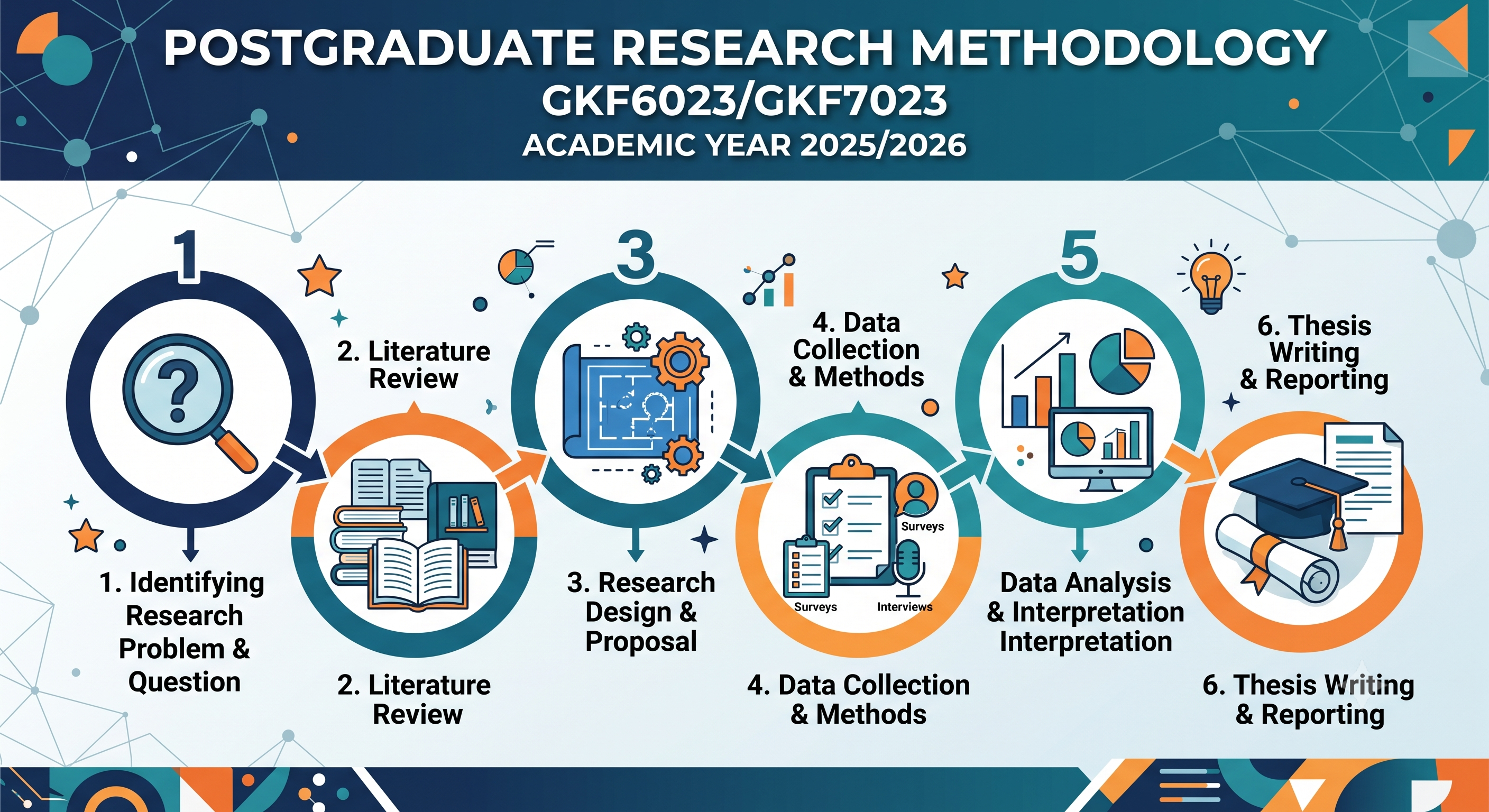
This Research Methodology eLEAP page (under the code SSF6023 and SSF7023) is designed to support postgraduate students by research at FSSK in developing a strong foundation for their research journey. The course introduces essential concepts in research design, philosophical assumptions, qualitative and quantitative approaches, data collection techniques, and basic data analysis. Through a series of structured modules, discussions, and practical examples, students will be guided to refine their research focus, understand methodological choices, and strengthen their ability to design and conduct rigorous, ethical, and meaningful research. The course also aims to build confidence in academic inquiry and prepare students for proposal development and thesis work within the social sciences and humanities context.


This eleap page is created for STB6033 Microbiological Food Safety. With the eLEAP page established, teaching and learning activities will become more effective and efficient, enabling students to actively engage in learning activities and make full use of the course resources.
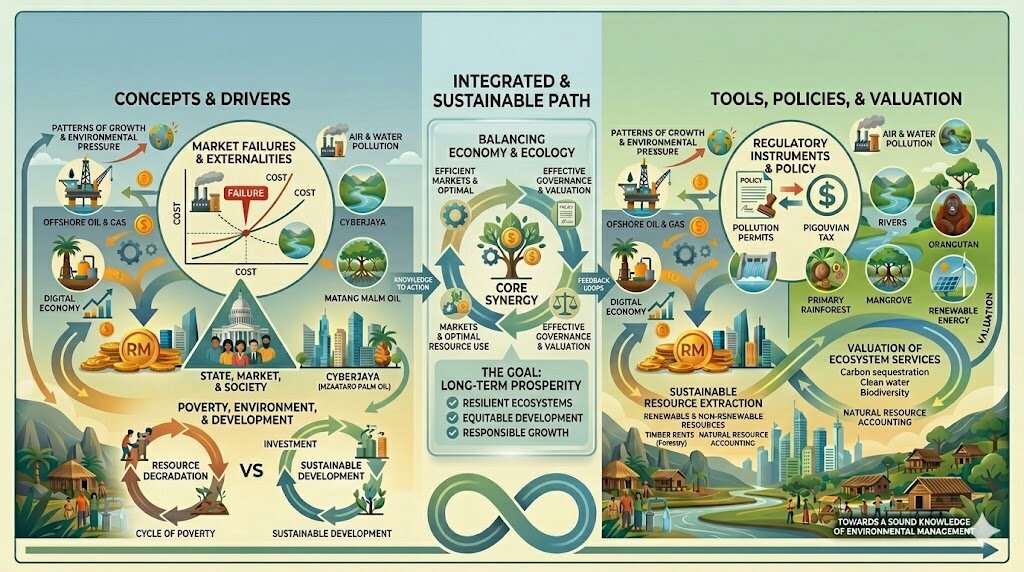
This course aims to provide students with a holistic approach on the importance of ecological knowledge necessary for the management of the environment. Highlights include the important concepts in ecology giving broad coverage on the limiting factors as well as intra- and interspecific
interaction of a population in various types of ecosystems.
In this course, students will be given the opportunity to discuss and present their work regarding various environmental issues.